CVF x Objects
Why choose local blooms?
Our fields are low-till and hand-cultivated with legacy in mind and we never use pesticides on our crops.
We want to spread as much joy & knowledge about local cut flowers as we do with the food we grow. These blooms tell a story of seasonality, stewardship, and of course heritage. Not to mention, the care that comes from growing things close to home, reminding us that beauty can be both fleeting and deeply grounded in community. Enjoying seasonally-appropriate flowers authentically ties us to the natural cycles of the Earth and no doubt supports small-scale farms like Ceiba Valley.

About Objects:
Objects by Steven Othello is an artistic expression of his unique perspective on the world of everyday "objects." Through his collection, he reimagines familiar items that hold meaning in his life, infusing them with new significance through his distinct lens. Objects is more than just an assortment of curated items; it is an invitation to challenge one's perceptions of the mundane and to appreciate the extraordinary within the everyday. His ultimate goal is to empower individuals to reconsider their surroundings and contemplate the world they desire to inhabit.
Sunflower
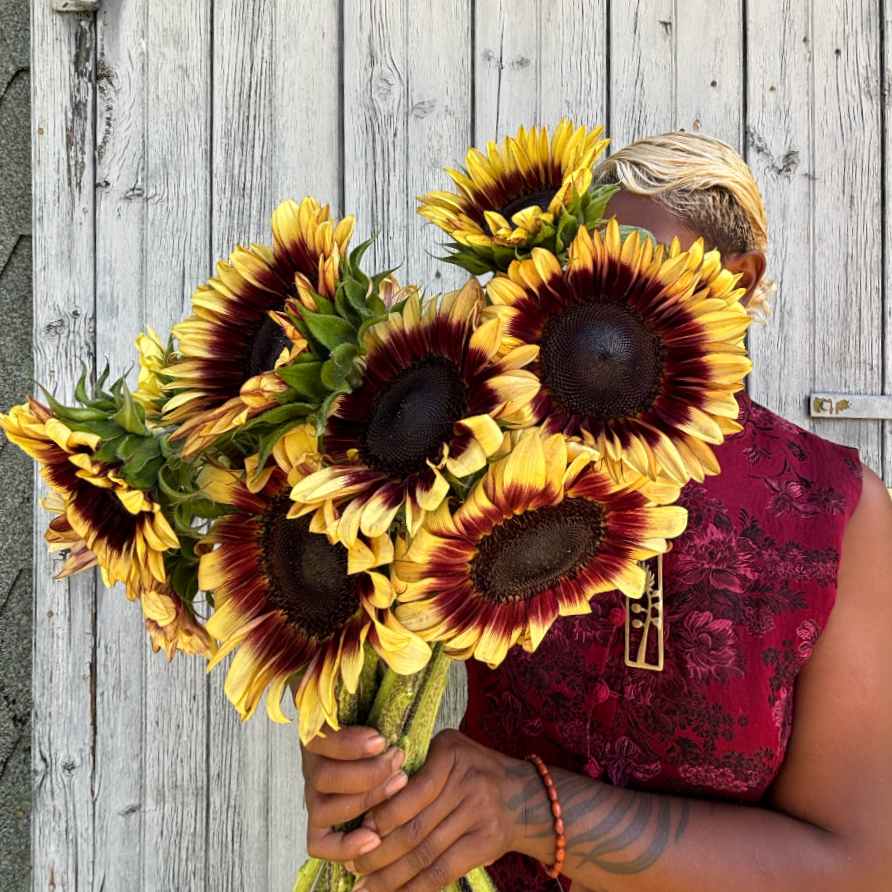
CVF varieties include Double Quick Orange, White Lite, Red, Red Lemon, and Plum.
In observing Sunflowers, you learn as they grow that their faces follow the sun. When they reach their bloom phase they turn away from the sun, conserving their energy. This characteristic is known as Heliotropism, the seasonal motion of the plant as they track the sun's direction across the sky.
Within agriculture, an Indigenous technique that we use at CVF is companion planting with Corn, Beans, and Squash. This is called the 3 Sisters because when grown together they form a symbiotic relationship. The Corn provides the stalk for the beans to climb up, the Beans provide necessary Nitrogen for the Corn, and the Squash grows low to the ground preventing weeds and retaining moisture in the soil. However, some folks consider the Sunflower to be the 4th sister. In this relationship, the Sunflower attracts beneficial and necessary pollinators while also providing a food source along with the Corn, Beans, and Squash.
In addition, these incredible plants are used for Phytoremediation. Meaning they have the ability to extract radioactive isotopes from the ground. They’ve been used for the nuclear disasters in both Chernobyl, Ukraine and Fukushima, Japan.
Fun fact:
The tallest Sunflower recorded was 35’ 9”. Here at CVF while the tallest Sunflower isn’t the goal, we can control how large the flower head will be. When planted closer the head is smaller due to less nitrogen intake. In contrast, when spaced further apart you can get massive heads as big as 2 feet wide.
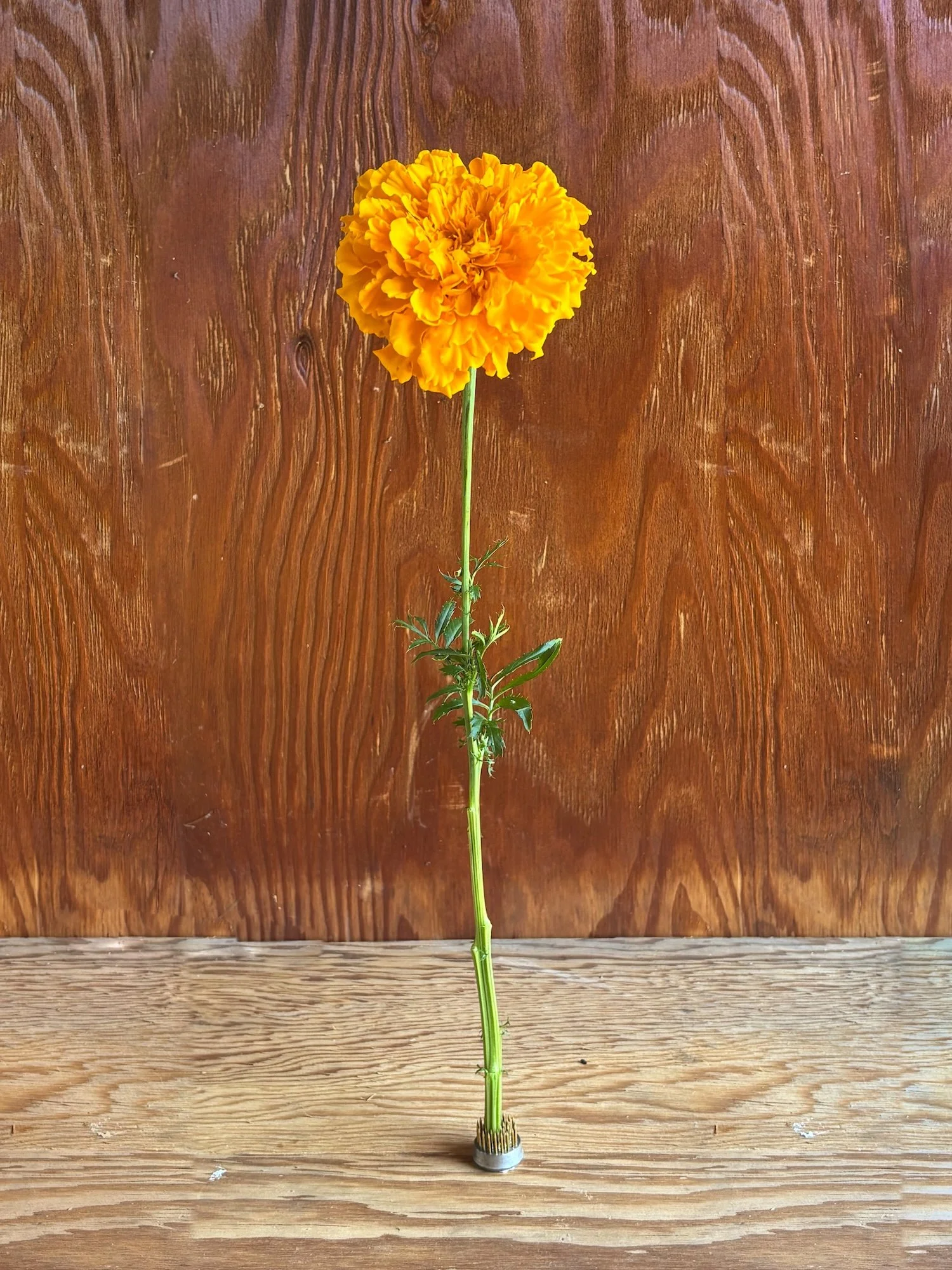
Mexican Marigold
CVF varieties include Giant Orange.
Being native to Mexico, their Indigenous name in Nahuatl is Cempaxochitl. You may know them from Dia De Los Muertos in which families create Ofrendas (Offerings) to honor their departed family members that have passed. Within agriculture, their strong, earthy scent helps to deter unwanted pests like Nematodes, Mosquitoes, and even Deer. This strategy of companion planting makes them an asset on our farm with our vegetable crops. In addition, they produce brilliant sun-drenched yellows, oranges, and white. In fact, the dyeing process is highly accessible and simply involves simmering the petals to extract their pigments.
Lastly, we’d be remiss to mention the importance of the Marigold in Indian tradition for weddings and celebrations. But did you know during the Nepalese Hindu celebration of Kukur Tihar (Nepali: कुकुर तिहार), dogs are given special foods, adorned with Marigold garlands, and given forehead marks? Worshippers believe that they are the messengers and gatekeepers of Yama, the God of death.
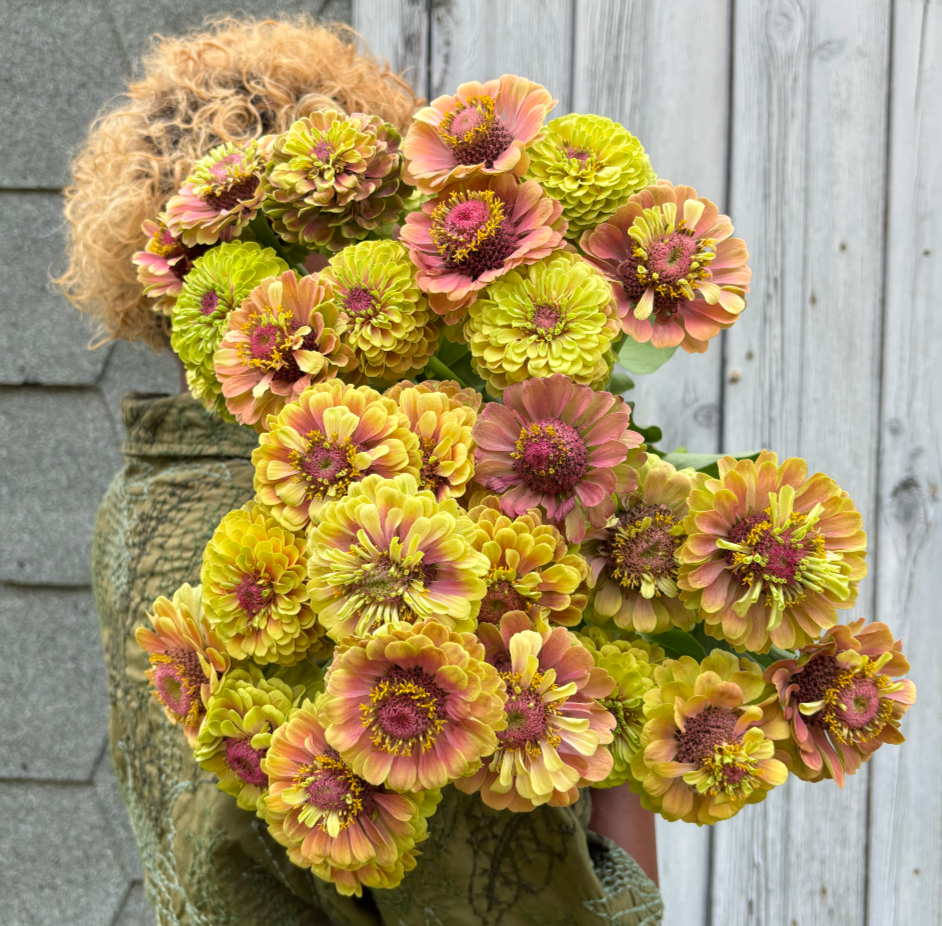
Zinnia
CVF varieties include Queeny Lime Blush, Queeny Lemon Peach, and Zinderella Peach.
Zinnia originated as wildflowers in Mexico and are known as “Cartulinas”, translating to cardstock referencing their petals that look as if they were cut out of paper. Within agriculture, they’re considered a ‘Cut-And-Come-Again’ flower, meaning that the more you harvest, the more flowers the plant will produce. When we harvest these blooms through the late afternoon and evening we’ve noticed that the bees prefer resting on the capitulum of the flower like a soft cozy bed.
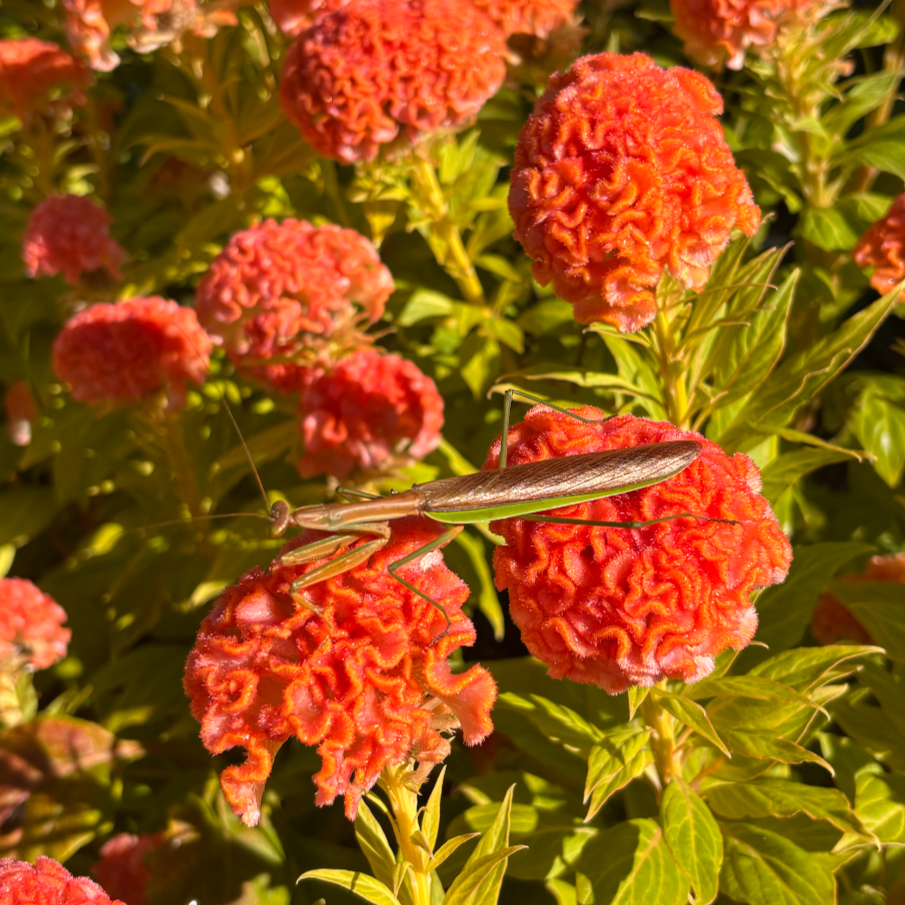
Celosia
CVF varieties grown include Orange Queen, Autumn Blaze, and Glowing Embers.
Efo Shoko or Lagos Spinach is a type of Celosia variety that has edible leaves used in stews and soups. Aside from culinary uses, Celosias are long-lasting dried flowers that retain their color well when used for dried arrangements.
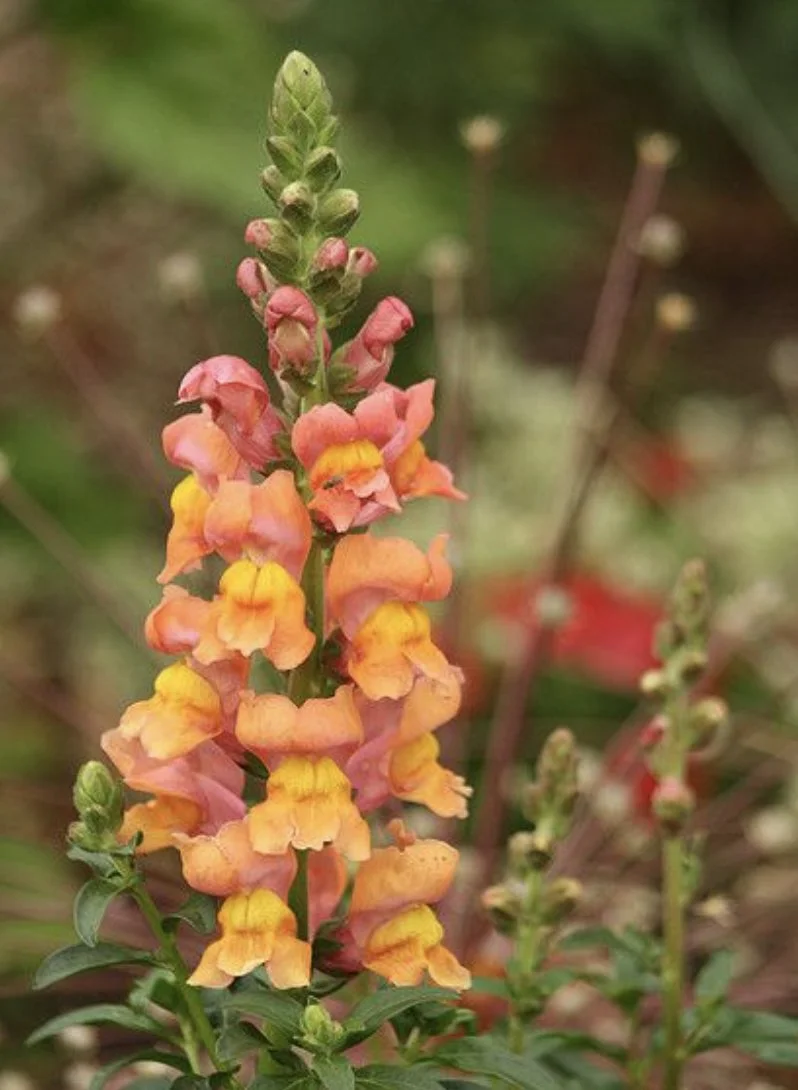
Snapdragon
CVF varieties include Chantilly Light Salmon, Opus Early Bronze, and Madame Butterfly Red.
We’ve learned within our first growing year that Snapdragons are cold hardy meaning that a drop in temperature won’t kill them so easily. They’re able to be grown in both early Spring and Fall due to the fact. Eventually when the flowers dry on the plant, you’ll notice that the leftover seed pods are shaped like tiny skulls. Culinarily, the fresh petals can be used in salads, cocktails, and desserts.
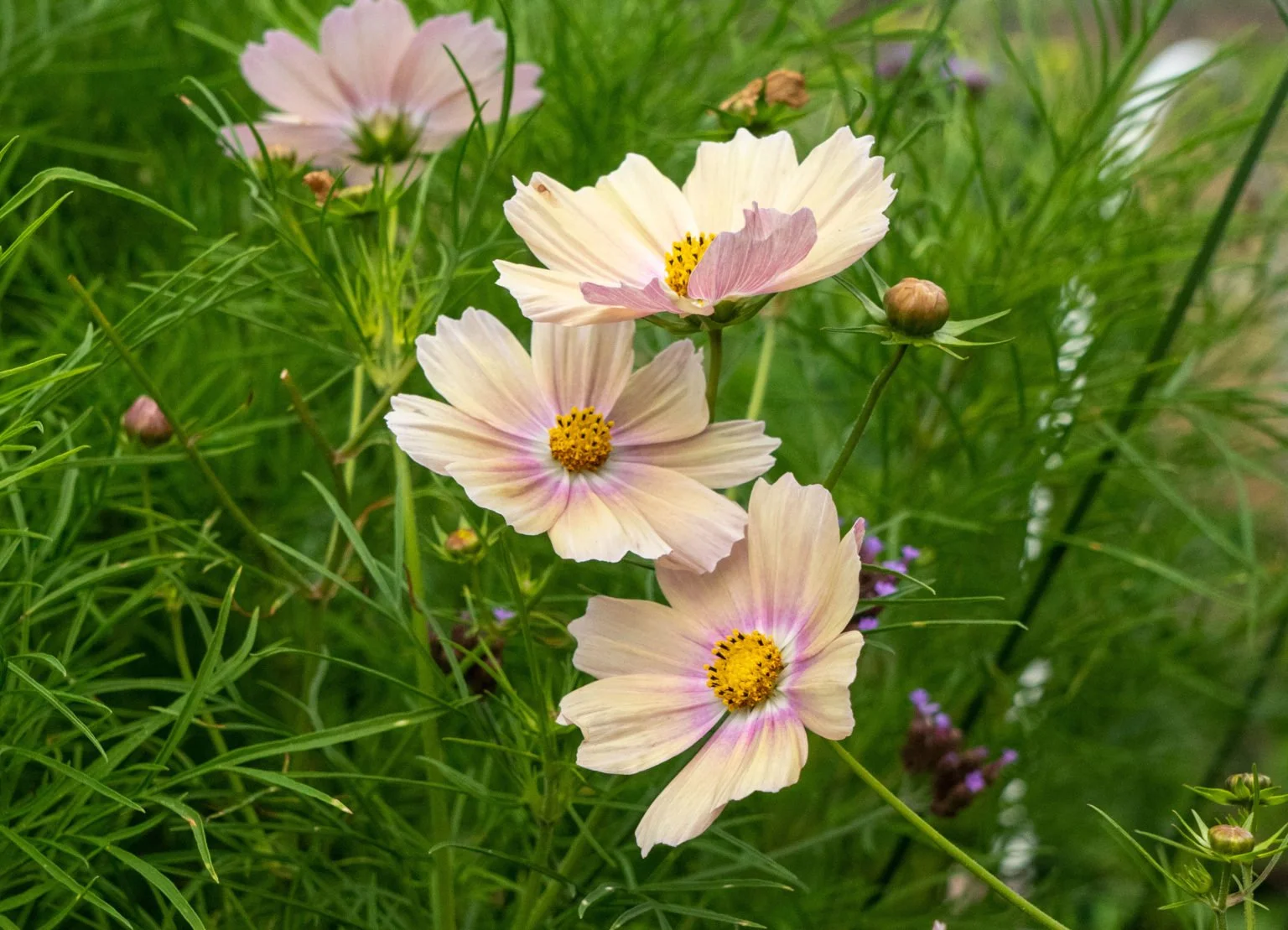
Cosmos
CVF varieties include Apricotta, Apricot Lemonade, and Kiiro.
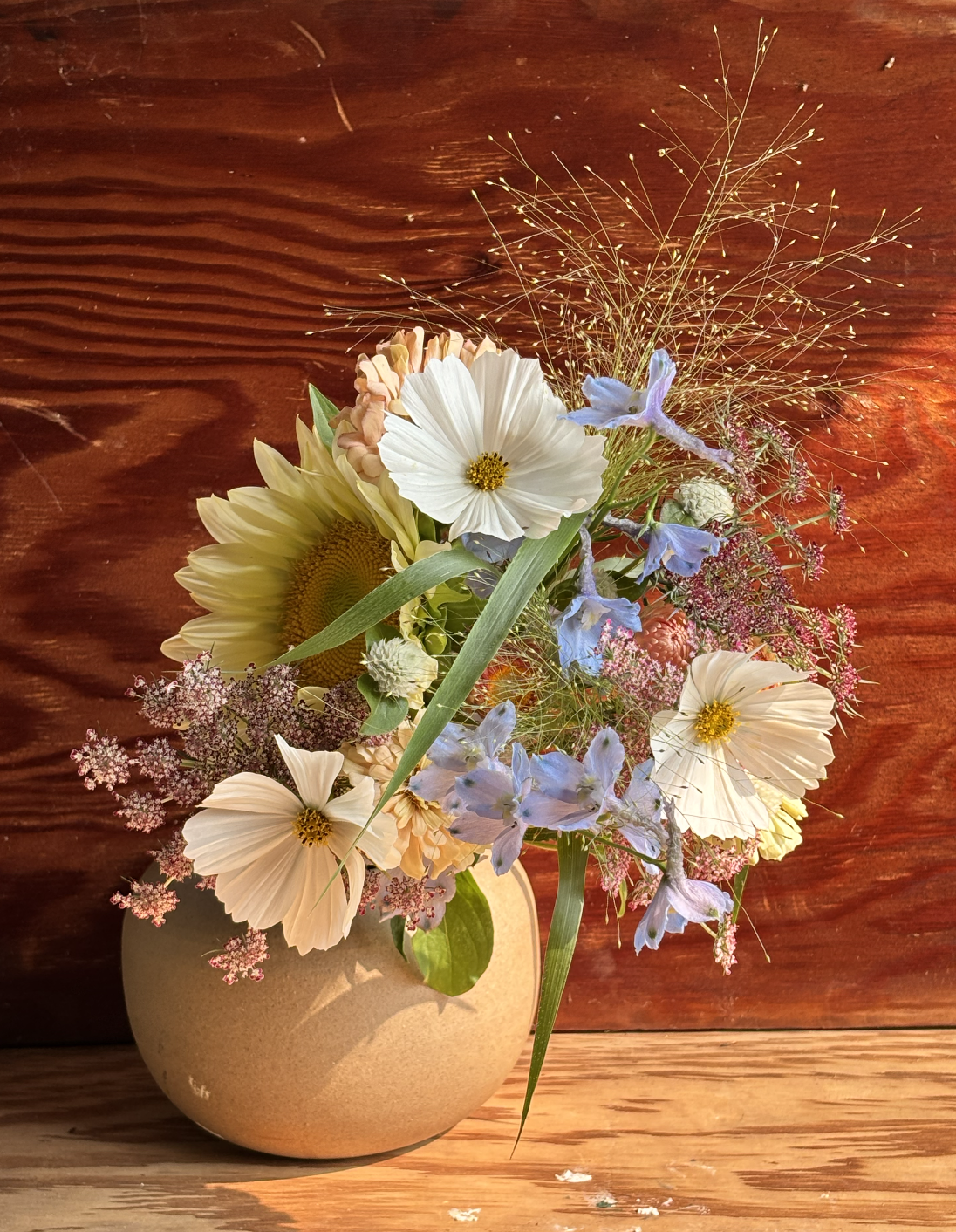
There are 35 different species of Cosmos and in your bouquet is one named Cosmos Bipinnatus. Another species which is native to Mexico is Cosmos Atrosanguineus, also called the ‘Chocolate Cosmos’ and yes indeed, it smells just like its name.
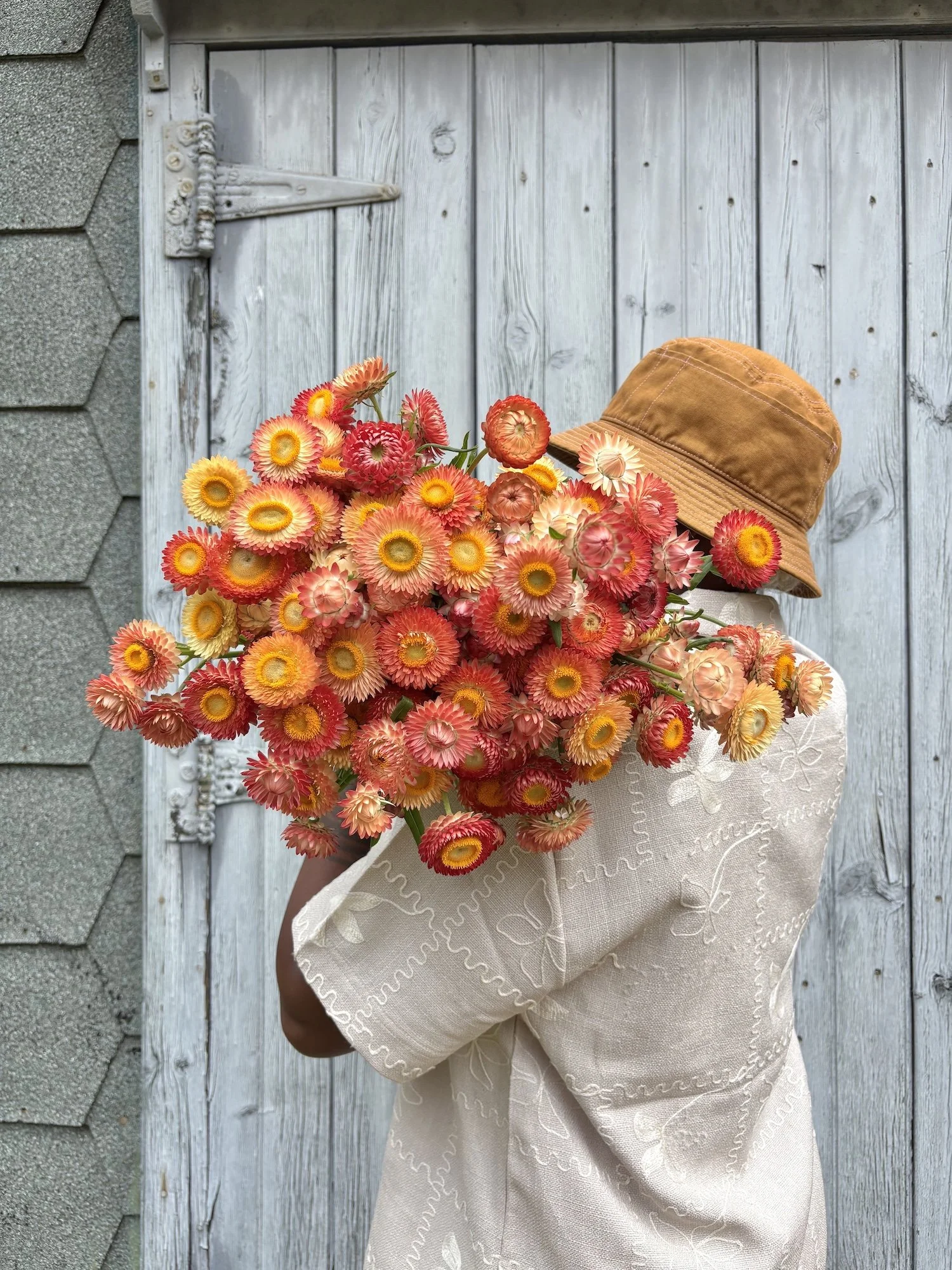
Strawflower
CVF varieties include Apricot Peach.
Native to Australia, these papery flowers add such a small vibrant touch to the bouquets. Here at Ceiba we call this the forever flower because it dries so well. In fact, the petals on this one aren’t actually petals at all but rather called ‘bracts’. These bracts are technically leaves that protect the flower in the very center. In the Summer and early Fall, our Apricot Peach variety is perfect for dried bouquets and holiday wreaths.
Potential uses for your bouquet:
— Placed on your altar as an offering to your ancestors.
— Baño’s or herbal baths that are meant to cleanse the mind, body, and spirit. Simply cut the flower head off or pluck the petals and place them in a bath for a soak.
— Some stems can be hung upside down to dry and later used for dried arrangements.
— Both Snapdragon and Marigold petals can be used as garnishes. Try fresh on salads, cocktails/mocktails, and desserts.
— Highly pigmented flowers such as Marigolds, Cosmos, Celosia, and even Sunflowers can be used in plant dyeing.